Why Educating Boys and Men on Menstrual, Reproductive, and Sexual Health Matters
Client: HERGhana
Menstrual Health Is Not Just a Women’s Issue
Nearly 500 million people globally cannot manage their periods safely (Sommer et al., 2015; NLM, 2021). Menstruation is often treated as a “private” or “women’s issue,” discussed behind closed doors or ignored altogether. Half of humanity experiences menstruation. The world’s silence on the subject does not just affect girls and women: it shapes communities, economies, and entire societies.
This silence is particularly damaging in situations where period poverty and stigma keep girls out of school. In Ghana, as many as 9–9.5 out of 10 girls miss class during menstruation, and nearly half resort to unsafe product alternatives like rags (Mohammed et al., 2020). While the consequences fall most heavily on girls, the knowledge gap in menstrual education is reinforced by the exclusion of boys and men from menstrual education.
We can’t continue to only teach girls about their bodies. If we want to end stigma and create gender equality, we must educate boys and men about menstruation, reproduction, and sexual health, including the meaning of consent.
Silence and Stigma: The Cost of Male Ignorance
When men lack knowledge about menstruation, stigma thrives. In schools across Ghana, girls report being teased or humiliated by boys when their periods are visible (Osei, 2019). This ridicule contributes to absenteeism and, eventually, higher dropout rates. It is not just classmates who reinforce the silence. Male teachers, often embarrassed or uninformed, may avoid the subject altogether, leaving girls without adult allies in school.
This stigma extends beyond the classroom. In households where fathers or brothers control finances, girls may not receive money for sanitary products if men see them as “luxuries.” In Ghana, this is worsened by a 17.5% VAT on pads and tampons, which remain classified as “luxury items” (HERGhana). In health care, women’s reproductive health concerns are often minimized by uninformed partners or dismissed by providers who assume silence is normal.
Cultural taboos may also reinforce this cycle. Menstruation is framed as dirty or polluting: a shameful secret to be hidden. These myths are passed down across generations, in part because boys are rarely taught otherwise (Sommer et al., 2015). The result is not only lost education but also long-term health risks, lower self-esteem, and a widening gender equity gap.
Why Men Must Be Part of the Solution
The idea that menstrual or reproductive health is “women’s business” obscures the reality that men play pivotal roles in women’s lives. Husbands may control household budgets, fathers influence daughters’ schooling, policymakers (most often men) draft tax codes and education policies. When they are uninformed about menstruation and reproductive health, they unintentionally (or intentionally) uphold inequality.
Involving men leads to better outcomes. Studies in reproductive health demonstrate that when men are educated and engaged, women are more likely to seek health care, use safe products, and stay in school (Doyle et al., 2018; Pulerwitz et al., 2019). When men are left out, stigma and misinformation deepen.
Educating boys and men also fosters empathy and stronger relationships. Fathers who understand menstruation support their daughters with dignity instead of shame. Brothers who learn about menstruation grow up as allies, not tormentors. Partners who know about reproductive health and fertility are better equipped to share responsibility for contraception, family planning, and household labor.
This is not about “helping women with their problems.” It is about recognizing that reproductive and menstrual health are human health issues, and that men must share responsibility for them.
Ghana’s Reality: Period Poverty and Gender Gaps
The situation in Ghana illustrates the stakes here. Research suggests that 44–45% of Ghanaian girls use cloth rags instead of pads during their periods (Mohammed et al., 2020). These methods can be unsafe, leading to infections and long-term health problems. Because sanitary products are taxed at high rates, many families cannot afford them. In rural areas, where access is even scarcer, this problem is particularly acute.
The educational costs are severe: when girls miss several days of school each month, their grades suffer and dropout rates rise (Baiden et al., 2021). Over time, this perpetuates gender inequality in education and economic opportunity.
And yet, boys often receive no information about menstruation in schools. Puberty education, when it exists, is commonly split by gender, with boys taught about sperm and nocturnal emissions while girls learn about menstruation (Sommer et al., 2015). The result: boys remain uninformed, and the silence surrounding menstruation grows.
Programming for Boys: Lessons from Ghana and Beyond
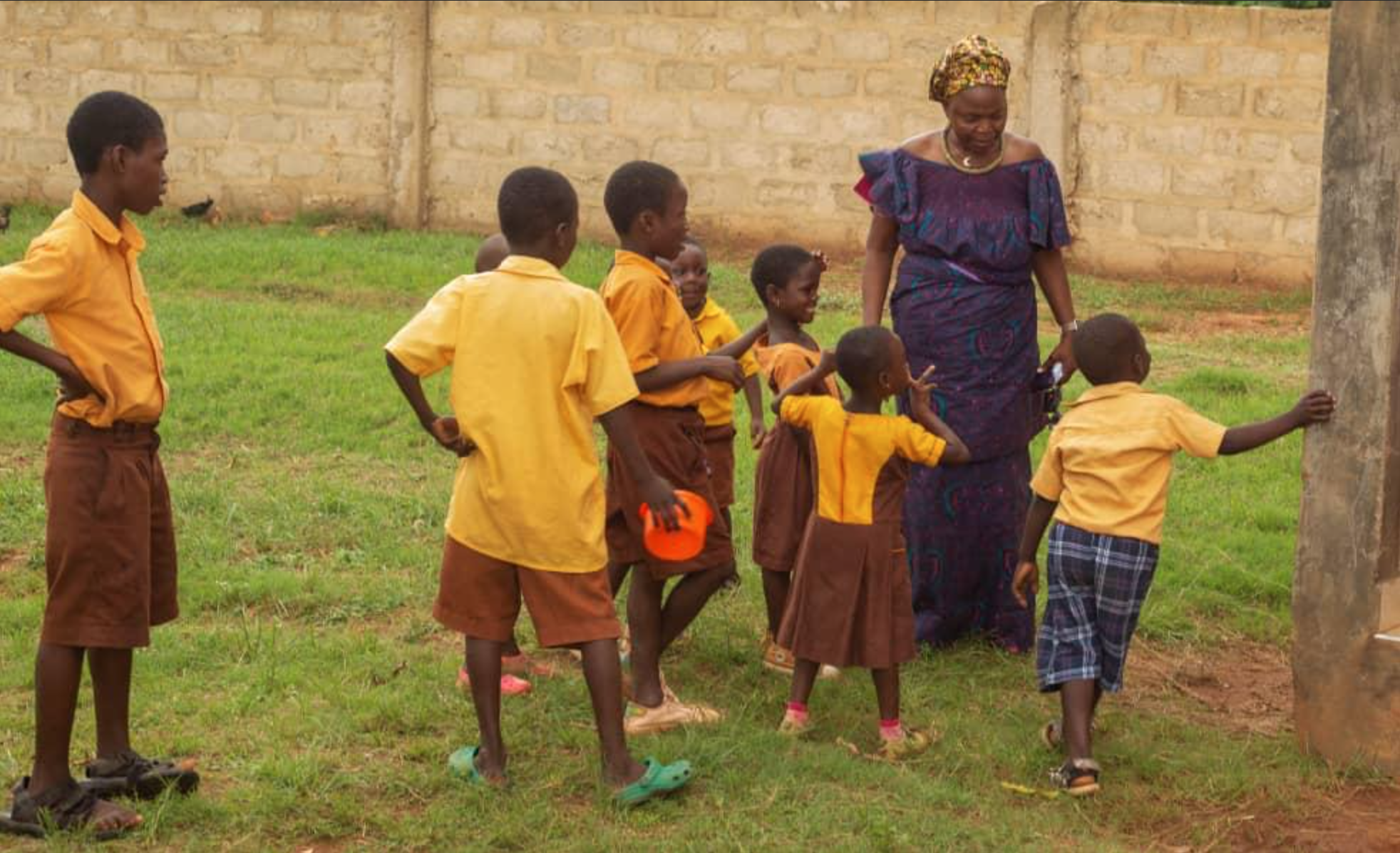
One of the most promising solutions is school-based programming that includes boys in menstrual health education. In Ghana, organizations like HERGhana run workshops that not only distribute reusable menstrual products but also facilitate open conversations with both girls and boys. By engaging boys early, HERGhana challenges stigma before it hardens into lifelong attitudes.
This approach is supported by evidence from other contexts:
In Kenya and Uganda, UNICEF-backed programs that included boys in menstrual health sessions found significant reductions in teasing and stigma (UNICEF, 2020).
In Bangladesh, BRAC’s gender clubs teach both boys and girls about puberty, hygiene, and consent, leading to measurable improvements in attitudes toward girls’ education (Sommer et al., 2015).
Globally, the MenEngage Alliance has documented how engaging boys on gender and health shifts cultural norms over time (MenEngage, 2019).
These examples demonstrate that teaching boys is not just a symbolic gesture. It is an intervention with real, measurable impact on the dignity, education, and health of girls. But successful programming must be continuous and embedded in communities. A single workshop is not enough; changing norms requires long-term engagement.
Sex Ed, Consent, and Shared Responsibility
Comprehensive sex education (CSE) is another crucial factor. Sex education is frequently either absent or narrowly focused on biology and risk prevention. In many Ghanaian schools, boys and girls are separated, leaving boys unaware of menstruation and girls without male allies (Jewitt & Ryley, 2014).
Effective and honest CSE goes further. It teaches the basics of reproduction, menstruation, and fertility, but also includes social dimensions:
Consent and respect: teaching boys that relationships require mutual agreement and care.
Shared responsibility: contraception, hygiene, and sexual health are not “women’s responsibilities” but joint ones.
Power dynamics: unpacking the ways gender norms affect decision-making, safety, and health.
Research shows that when consent is integrated into sex ed, rates of harassment and gender-based violence decrease (Haberland, 2015; Kettrey & Marx, 2019). When boys are taught empathy and responsibility alongside biology, the stigma around menstruation weakens, and girls gain safer, more respectful environments.
HERGhana’s Approach: Education for All
HERGhana’s work embodies these principles. Our mission is not only to distribute sustainable menstrual products but also to reshape the cultural narratives around menstruation. Through free educational workshops in rural Ghana, the organization empowers girls to understand their bodies and equips them with reusable pads and menstrual cups.
Boys are engaged in the conversation as allies and learners. By normalizing discussions of menstruation in mixed groups, HERGhana helps dismantle a culture of secrecy. By returning to schools for follow-up visits, the organization ensures that these lessons last, not just as information, but as a cultural shift.
HERGhana’s model highlights an important truth: ending period poverty requires more than products. It requires education for entire communities, and boys and men are a fundamental part of that effort.
Conclusion: Toward a Future of Shared Knowledge
Menstrual, reproductive, and sexual health are not niche issues for half the population. They are human issues that shape the health, dignity, and opportunities of entire societies. In Ghana and around the world, ignoring boys and men in this conversation only reinforces stigma and inequality.
When boys learn about menstruation, stigma decreases; when men are engaged in reproductive health, women’s outcomes improve; when consent and respect are taught alongside biology, communities become safer.
Ending period poverty in Ghana means educating girls, but it also means educating boys. HERGhana’s vision is a future where menstruation is not a barrier to education, dignity, or opportunity. And that vision is only possible when everyone, regardless of gender, takes responsibility for menstrual and reproductive health.