WHAT IS VYSHYVANKA?
Client: VATAHA Foundation
You may have heard a lot about VATAHA promoting our Vyshyvanka Day celebrations, but what is vyshyvanka and why does it mean so much to Ukrainian people?
This year, VATAHA is hosting two Vyshyvanka Day events, in The Hague (May 20) and Rotterdam (May 23), with hands-on workshops and artistic performances.
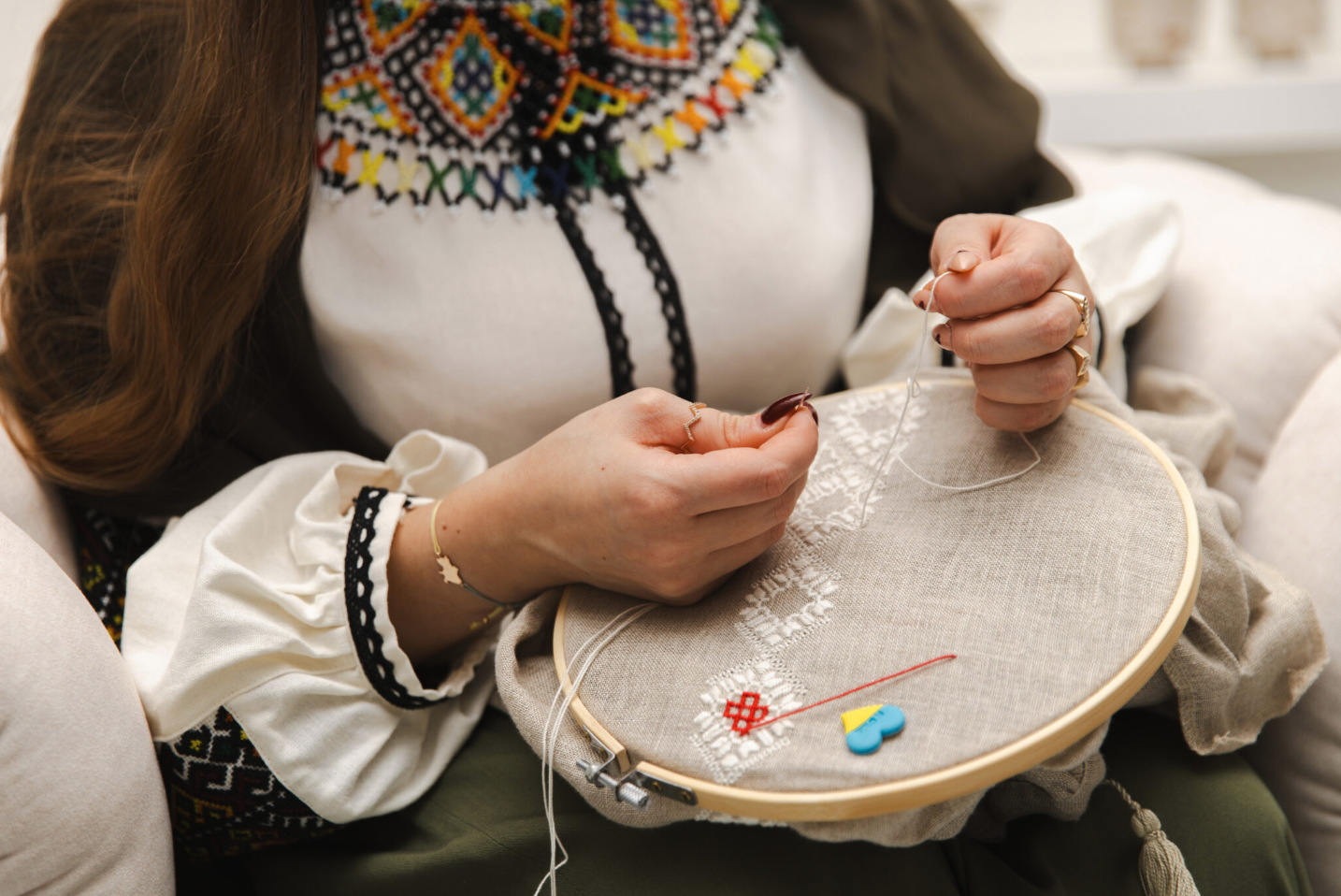
The word itself derives from the Ukrainian вишива́ти (vyshyvaty), “to embroider.” At its core, vyshyvanka is a highly complex tradition of embroidery shaped by regional variation with distinct techniques, patterns, colours, and material.
Vyshyvanka refers broadly to the embroidered shirt in Ukrainian national dress. It is defined by this embroidery, which carries several layers of meaning and symbolism, signalling regional and national identity, cultural and ethnic histories, and containing personal narratives within its many forms.
Embroidery as a Marker of Region and History
The significance of the vyshyvanka far surpasses the aesthetic beauty of the clothing. The techniques, patterns, and colours of the embroidery are tied to the regions from which they originate, to the point where an expert can identify where a shirt was made by studying its stitching.
In earlier periods, thread was dyed with local materials (bark, leaves, flowers, and berries), in a literal weaving of the regional environment within the shirt itself. This created a limited colour palette that anchored much of the work: black, red, and white were usually the foundational colours, with yellow, blue and green frequently used alongside them. In the Borshchiv region, for example, shirts are known for a heavy use of black embroidery, while in the Carpathians and surrounding areas multi-coloured embroidery is more frequent.
This regional variation means that there is no single form of vyshyvanka. About 200 embroidery techniques and over 100 distinct stitches have been documented. Each of these stitches holds the weight of the collective, multi-generational memory of each region or town. Each vyshyvanka is a thread that reaches back through time, a symbol of belonging and of history.